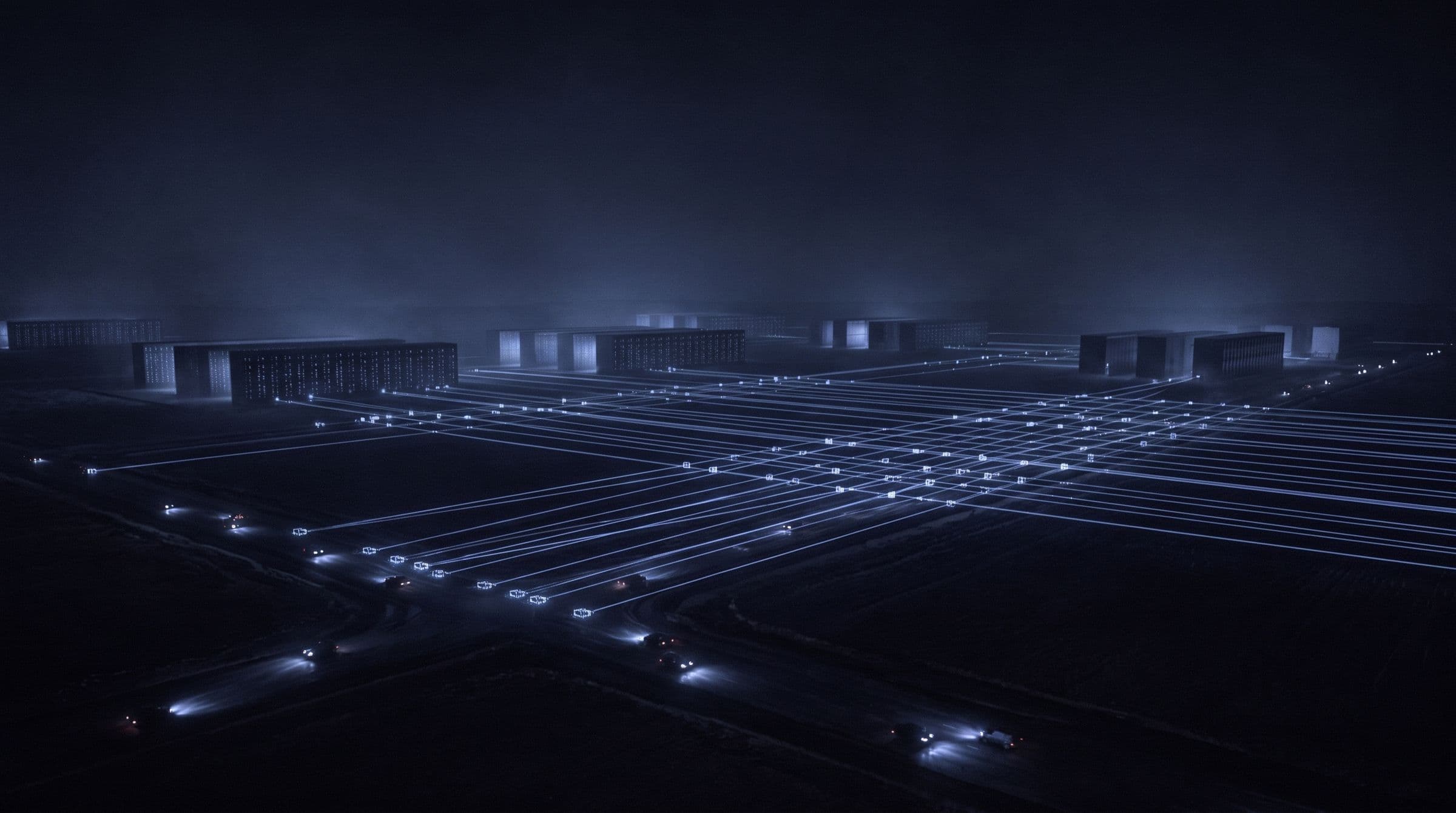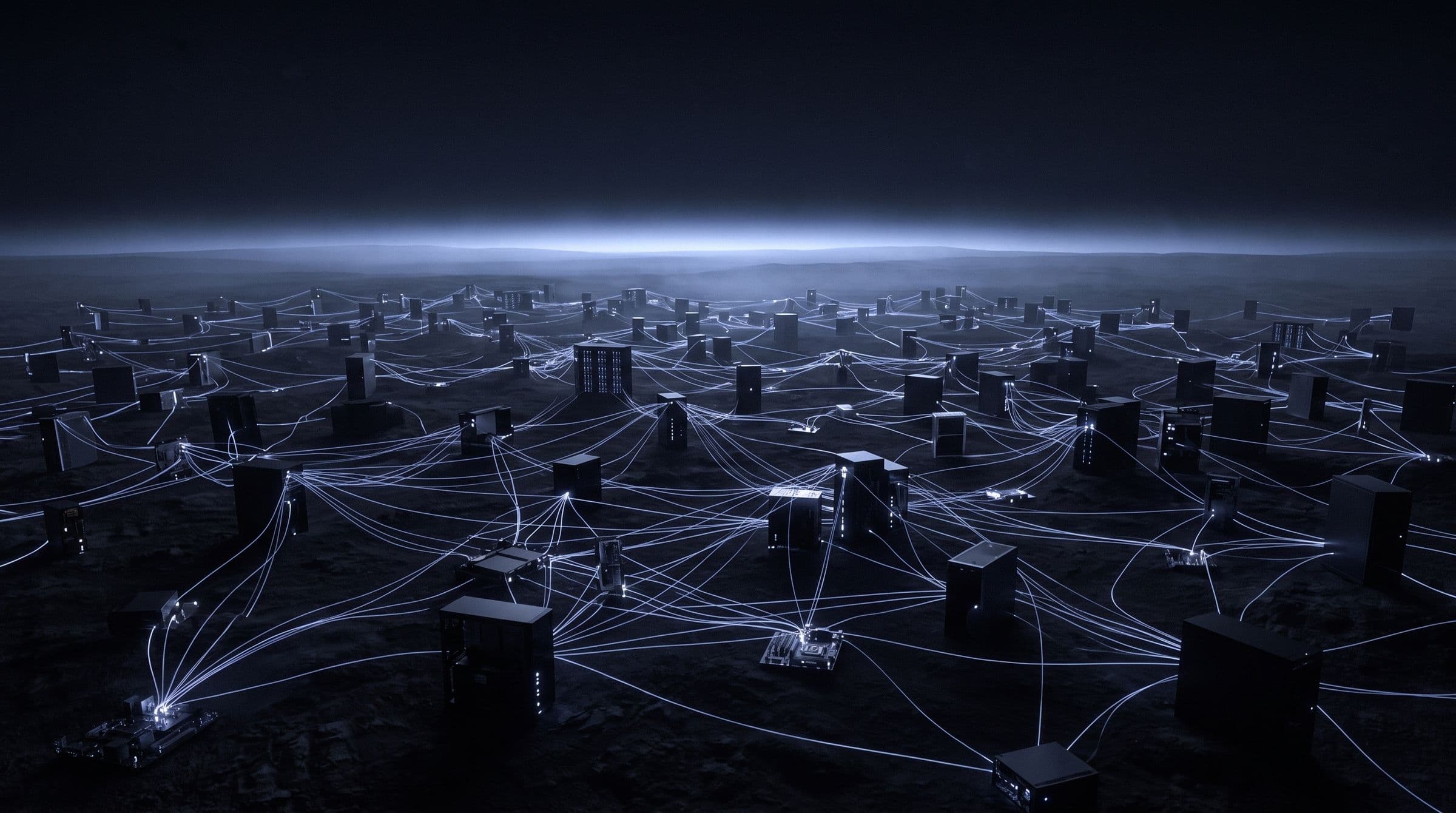
Tenzro Network is an open network for the Machine Economy. It is one network where models are served, compute is rented, identities are issued, payments clear and agents act, settling in TNZO.
The premise
A growing share of economic activity is carried out by software. Models serve inference, agents make decisions and pay for what they use, and devices buy and sell work with each other. They transact with people, with services and with other agents.
None of this fits cleanly onto chains designed for token transfers, or onto AI marketplaces that ask you to take an operator's word for what it served. Agents need keys that cannot be copied, payments that settle per use, and evidence of which model ran, where, and under which policy.
Tenzro is built for that. It is not a layer 2 or an application chain. It is a network with its own settlement ledger, its own identity protocol, its own unit of account (TNZO) and open protocols to the systems around it.
What the network provides
Intelligence. Open models across modalities: chat, embeddings, vision, forecasting, segmentation, detection, speech and video. Operators serve them behind OpenAI-compatible APIs and are paid per use.
Compute and storage. GPU capacity, storage and databases from independent operators, from a single machine at home to a data centre, billed on service the chain can check.
Security. Keys rooted in hardware: a TPM 2.0, a Secure Enclave or a passkey. Confidential workloads run in trusted execution environments on Intel TDX, AMD SEV-SNP, AWS Nitro and NVIDIA confidential GPUs, and each attestation is verified to its vendor root. Attestation is evidence about where a workload ran; keys stay with their owners' hardware.
Identity. One protocol for humans and machines: W3C DIDs, verifiable credentials and delegation scopes that bound what an agent may do.
Payments. Open agent payment protocols such as x402, MPP and AP2, bound to identity and enforced on chain.
Settlement. A ledger with EVM, SVM and native runtimes over one state, Block-STM parallel execution, an EIP-1559-style fee market and passkey accounts whose keystore lives in consensus state.
The unit of account
TNZO is first a unit of account for the resources the network coordinates: inference, compute, storage, settlement gas, identity registration and agent execution. It pays all network fees and transaction settlement. Governance is its second role.
TNZO has one native balance, with views in the EVM and the SVM. There is no bridge between runtimes on the same ledger and no liquidity split across them.
Why open
Open because anyone can install a node and take part, as a validator, a model provider, a compute or storage provider, or a TEE provider. Open because the protocols and the cryptography are public, and the code is Apache 2.0. Open because there is no central provider list and no gated registry. The Tenzro Foundation stewards the network; anyone can be an operator, a developer or a user.
To see what runs on it, read the Network overview, or run a node from Operators.